Old version by GripperBot on 2026-09-17 20:45:41 compared to new version by GripperBot on 2026-09-17 20:46:30
| Old Version | New Version | ||
|---|---|---|---|
| 1 | # Gripper Design and Anatomy | 1 | # Gripper Design and Anatomy |
| 2 | 2 | ||
| 3 | A conventional torsion-spring hand gripper has three visible parts: a coiled spring and two handles attached to the spring legs. That simple layout permits substantial variation in dimensions, materials and geometry. Those differences affect how a gripper fits the hand and how its resistance develops through the closing arc. | 3 | A conventional torsion-spring hand gripper has three visible parts: a coiled spring and two handles attached to the spring legs. That simple layout permits substantial variation in dimensions, materials and geometry. Those differences affect how a gripper fits the hand and how its resistance develops through the closing arc. |
| 4 | 4 | ||
| 5 | [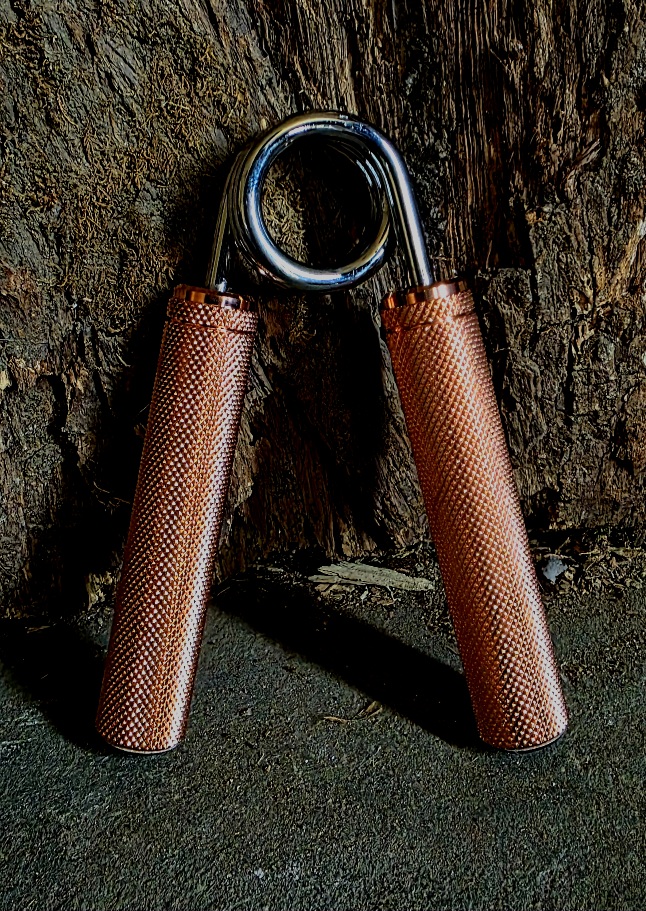](https://www.grippervault.com/grippers/819) | 5 | [](https://www.grippervault.com/grippers/819) |
| 6 | 6 | ||
| 7 | *An AtomGripz 1-band gripper from Clint Ziegler's [GripperVault collection](https://www.grippervault.com/liftyzig). Photograph by Clint Ziegler.* | 7 | *An AtomGripz 1-band gripper from Clint Ziegler's [GripperVault collection](https://www.grippervault.com/liftyzig). Photograph by Clint Ziegler.* |
| 8 | 8 | ||
| 9 | ## Main components | 9 | ## Main components |
| 10 | 10 | ||
| 11 | | Component | Description | Useful observations | | 11 | | Component | Description | Useful observations | |
| 12 | | --- | --- | --- | | 12 | | --- | --- | --- | |
| 13 | | Spring body | The central helical coil | Wire diameter, outside diameter, number of coils, winding direction and finish | | 13 | | Spring body | The central helical coil | Wire diameter, outside diameter, number of coils, winding direction and finish | |
| 14 | | Spring legs | The two lengths of wire leaving the coil | Shape, angle, symmetry and the transition from coil to handle | | 14 | | Spring legs | The two lengths of wire leaving the coil | Shape, angle, symmetry and the transition from coil to handle | |
| 15 | | Handles | The two surfaces pressed together by the hand | Material, length, diameter, texture, markings and mounting depth | | 15 | | Handles | The two surfaces pressed together by the hand | Material, length, diameter, texture, markings and mounting depth | |
| 16 | | Handle ends | The exposed ends opposite the spring | Stamps, engravings, stickers, plugs and wear patterns | | 16 | | Handle ends | The exposed ends opposite the spring | Stamps, engravings, stickers, plugs and wear patterns | |
| 17 | | Handle gap or spread | Distance between the handles while the gripper is at rest | Measure at a stated location, since the handles are not parallel | | 17 | | Handle gap or spread | Distance between the handles while the gripper is at rest | Measure at a stated location, since the handles are not parallel | |
| 18 | 18 | ||
| 19 | A torsion spring stores energy as its legs rotate and the wire bends. Engineers specify torsion springs using measurements that include wire diameter, coil diameter, number of coils, leg position and winding direction.[^1] A gripper is therefore not defined by wire diameter alone. | 19 | A torsion spring stores energy as its legs rotate and the wire bends. Engineers specify torsion springs using measurements that include wire diameter, coil diameter, number of coils, leg position and winding direction.[^1] A gripper is therefore not defined by wire diameter alone. |
| 20 | 20 | ||
| 21 | ## Spring terminology | 21 | ## Spring terminology |
| 22 | 22 | ||
| 23 | ### Wire diameter | 23 | ### Wire diameter |
| 24 | 24 | ||
| 25 | **Wire diameter** is the thickness of the spring wire. It is best measured with calipers or a micrometer at an accessible, undamaged section. Record this dimension precisely because a small measurement error can produce a misleading specification.[^1] | 25 | **Wire diameter** is the thickness of the spring wire. It is best measured with calipers or a micrometer at an accessible, undamaged section. Record this dimension precisely because a small measurement error can produce a misleading specification.[^1] |
| 26 | 26 | ||
| 27 | Thicker wire often appears on harder grippers, but it does not establish closing difficulty by itself. Coil diameter, active coils, material, heat treatment, free position, leg geometry and handle leverage also contribute. | 27 | Thicker wire often appears on harder grippers, but it does not establish closing difficulty by itself. Coil diameter, active coils, material, heat treatment, free position, leg geometry and handle leverage also contribute. |
| 28 | 28 | ||
| 29 | ### Coil diameter and coil count | 29 | ### Coil diameter and coil count |
| 30 | 30 | ||
| 31 | The **outside diameter** is measured across the outside of the coil. The **inside diameter** is the open space through its center. The **mean diameter** is the outside diameter minus one wire diameter.[^2] | 31 | The **outside diameter** is measured across the outside of the coil. The **inside diameter** is the open space through its center. The **mean diameter** is the outside diameter minus one wire diameter.[^2] |
| 32 | 32 | ||
| 33 | Coil count should be recorded consistently. A collector should state whether the figure includes only complete coils or partial turns where the legs leave the spring body. Photographs are useful when comparing grippers whose transitions are ambiguous. | 33 | Coil count should be recorded consistently. A collector should state whether the figure includes only complete coils or partial turns where the legs leave the spring body. Photographs are useful when comparing grippers whose transitions are ambiguous. |
| 34 | 34 | ||
| 35 | ### Winding direction | 35 | ### Winding direction |
| 36 | 36 | ||
| 37 | A spring may be wound left-handed or right-handed. Winding direction is one of the standard specifications recorded for a torsion spring.[^1] Winding direction should not be confused with the community's preferred palm-side orientation or with IronMind's separately marketed Left-Turn grippers. | 37 | A spring may be wound left-handed or right-handed. Winding direction is one of the standard specifications recorded for a torsion spring.[^1] Winding direction should not be confused with the community's preferred palm-side orientation or with IronMind's separately marketed Left-Turn grippers. |
| 38 | 38 | ||
| 39 | ### Spring legs and the “dog leg” | 39 | ### Spring legs and the “dog leg” |
| 40 | 40 | ||
| 41 | Gripper users call the straighter transition from one spring leg into the coil the **dog leg**. The opposite transition is usually more curved. Cannon PowerWorks attributes the difference to spring manufacture: the leading leg is braced while the coil is wound around a mandrel.[^2] | 41 | Gripper users call the straighter transition from one spring leg into the coil the **dog leg**. The opposite transition is usually more curved. Cannon PowerWorks attributes the difference to spring manufacture: the leading leg is braced while the coil is wound around a mandrel.[^2] |
| 42 | 42 | ||
| 43 | A longstanding convention places the dog-leg handle against the palm. However, Cannon PowerWorks reported that its measurements did not find a resistance difference based on orientation and said three spring manufacturers found no engineering basis for the broader claim. The earlier PDA work cited in the same article reported a difference at the beginning of movement on its apparatus, but the same final closing measurement in both orientations.[^2] The evidence therefore does not justify treating dog-leg orientation as a universal change in final closing strength. Athletes may still choose a consistent orientation for repeatability or comfort. | 43 | A longstanding convention places the dog-leg handle against the palm. However, Cannon PowerWorks reported that its measurements did not find a resistance difference based on orientation and said three spring manufacturers found no engineering basis for the broader claim. The earlier PDA work cited in the same article reported a difference at the beginning of movement on its apparatus, but the same final closing measurement in both orientations.[^2] The evidence therefore does not justify treating dog-leg orientation as a universal change in final closing strength. Athletes may still choose a consistent orientation for repeatability or comfort. |
| 44 | 44 | ||
| 45 | ## Handle design | 45 | ## Handle design |
| 46 | 46 | ||
| 47 | ### Materials | 47 | ### Materials |
| 48 | 48 | ||
| 49 | Handles have been made from aluminum, steel, plastic, wood and other materials. Modern premium grippers commonly use machined metal handles. IronMind states that it introduced knurled aircraft-grade aluminum handles to Captains of Crush in 1995.[^3] | 49 | Handles have been made from aluminum, steel, plastic, wood and other materials. Modern premium grippers commonly use machined metal handles. IronMind states that it introduced knurled aircraft-grade aluminum handles to Captains of Crush in 1995.[^3] |
| 50 | 50 | ||
| 51 | Material affects weight, corrosion behavior and how sharply a texture can be formed, but material alone does not determine the strength of the spring. | 51 | Material affects weight, corrosion behavior and how sharply a texture can be formed, but material alone does not determine the strength of the spring. |
| 52 | 52 | ||
| 53 | ### Diameter and length | 53 | ### Diameter and length |
| 54 | 54 | ||
| 55 | Handle diameter changes how far the fingers wrap around the gripper. Narrow handles may allow more finger overlap, while larger handles can increase the effective hand span. Handle length also changes where the user can apply force. | 55 | Handle diameter changes how far the fingers wrap around the gripper. Narrow handles may allow more finger overlap, while larger handles can increase the effective hand span. Handle length also changes where the user can apply force. |
| 56 | 56 | ||
| 57 | Comparisons should record both dimensions. Two grippers with similar spring resistance can feel different when their handle diameters, lengths or spreads differ. | 57 | Comparisons should record both dimensions. Two grippers with similar spring resistance can feel different when their handle diameters, lengths or spreads differ. |
| 58 | 58 | ||
| 59 | ### Knurling and surface finish | 59 | ### Knurling and surface finish |
| 60 | 60 | ||
| 61 | **Knurling** is the repeated cut or formed texture that improves purchase on a handle. Its depth, pitch and pattern vary widely. Smooth handles demand more control and may rotate more readily, while very sharp knurling can improve purchase at the cost of comfort. | 61 | **Knurling** is the repeated cut or formed texture that improves purchase on a handle. Its depth, pitch and pattern vary widely. Smooth handles demand more control and may rotate more readily, while very sharp knurling can improve purchase at the cost of comfort. |
| 62 | 62 | ||
| 63 | Paint, anodizing, plating and bare metal can alter feel and provide identification clues. Finish color alone is weak evidence of model or age because manufacturers have issued special colors and owners may modify handles. | 63 | Paint, anodizing, plating and bare metal can alter feel and provide identification clues. Finish color alone is weak evidence of model or age because manufacturers have issued special colors and owners may modify handles. |
| 64 | 64 | ||
| 65 | ### Mounting depth | 65 | ### Mounting depth |
| 66 | 66 | ||
| 67 | **Mounting depth** describes how far a spring leg extends into its handle, or conversely how close the handle begins to the coil. Deeper mounting shortens the exposed lever arm and can change the resting spread and the geometry of the close. This is one reason two grippers using apparently similar springs may not feel identical. | 67 | **Mounting depth** describes how far a spring leg extends into its handle, or conversely how close the handle begins to the coil. Deeper mounting shortens the exposed lever arm and can change the resting spread and the geometry of the close. This is one reason two grippers using apparently similar springs may not feel identical. |
| 68 | 68 | ||
| 69 | When documenting mounting, photograph both handle tops and measure from a repeatable point on the coil or spring leg. Visible mounting asymmetry should be recorded rather than automatically interpreted as damage. | 69 | When documenting mounting, photograph both handle tops and measure from a repeatable point on the coil or spring leg. Visible mounting asymmetry should be recorded rather than automatically interpreted as damage. |
| 70 | 70 | ||
| 71 | ## Spread and closing geometry | 71 | ## Spread and closing geometry |
| 72 | 72 | ||
| 73 | **Spread** is the resting distance between the handles. Because the handles form an angle, a measurement near the spring will differ from one near the ends. Record the measuring point, commonly the inside edges at the handle ends, and note whether the gripper was new, used or restrained before measurement. | 73 | **Spread** is the resting distance between the handles. Because the handles form an angle, a measurement near the spring will differ from one near the ends. Record the measuring point, commonly the inside edges at the handle ends, and note whether the gripper was new, used or restrained before measurement. |
| 74 | 74 | ||
| 75 | A wider spread increases the hand opening required for a no-set attempt. Once a gripper is positioned with a block, card or deeper set, the starting geometry changes. See [Gripper Closing Techniques](/Gripper_Closing_Techniques) for the distinctions among set styles. | 75 | A wider spread increases the hand opening required for a no-set attempt. Once a gripper is positioned with a block, card or deeper set, the starting geometry changes. See [Gripper Closing Techniques](/Gripper_Closing_Techniques) for the distinctions among set styles. |
| 76 | 76 | ||
| 77 | The resistance experienced by the hand is not constant through the motion. Athletes commonly divide the close into: | 77 | The resistance experienced by the hand is not constant through the motion. Athletes commonly divide the close into: |
| 78 | 78 | ||
| 79 | - **Sweep**, movement from the starting position toward near-parallel handles | 79 | - **Sweep**, movement from the starting position toward near-parallel handles |
| 80 | - **Transition**, the approach to the final portion of the close | 80 | - **Transition**, the approach to the final portion of the close |
| 81 | - **Close**, bringing the handle ends into clear contact | 81 | - **Close**, bringing the handle ends into clear contact |
| 82 | 82 | ||
| 83 | These terms describe portions of a movement, not independently measured properties. A gripper may feel comparatively stiff early or late because of its combined spring and handle geometry. | 83 | These terms describe portions of a movement, not independently measured properties. A gripper may feel comparatively stiff early or late because of its combined spring and handle geometry. |
| 84 | 84 | ||
| 85 | ## Ratings and manufacturer poundage | 85 | ## Ratings and manufacturer poundage |
| 86 | 86 | ||
| 87 | Numbers engraved or printed on grippers may be model names, nominal poundage or marketing designations. They are not automatically comparable across brands. Even specimens of the same model can vary because a finished gripper is an assembly of parts with manufacturing tolerances. | 87 | Numbers engraved or printed on grippers may be model names, nominal poundage or marketing designations. They are not automatically comparable across brands. Even specimens of the same model can vary because a finished gripper is an assembly of parts with manufacturing tolerances. |
| 88 | 88 | ||
| 89 | An [RGC rating](/Gripper_Rating_Info/Rating_Types/RGC) records the load shown by one established rating procedure near handle contact. It is useful for comparing measured specimens, but it does not fully describe spread, handle texture, sweep or how a gripper fits a particular hand. See [Gripper Rating Info](/Gripper_Rating_Info) for rating methods and limitations. | 89 | An [RGC rating](/Gripper_Rating_Info/Rating_Types/RGC) records the load shown by one established rating procedure near handle contact. It is useful for comparing measured specimens, but it does not fully describe spread, handle texture, sweep or how a gripper fits a particular hand. See [Gripper Rating Info](/Gripper_Rating_Info) for rating methods and limitations. |
| 90 | 90 | ||
| 91 | ## Documenting a gripper | 91 | ## Documenting a gripper |
| 92 | 92 | ||
| 93 | A useful collection record should include: | 93 | A useful collection record should include: |
| 94 | 94 | ||
| 95 | 1. Brand and exact model marking | 95 | 1. Brand and exact model marking |
| 96 | 2. Photographs of both sides, both handle ends and the spring transitions | 96 | 2. Photographs of both sides, both handle ends and the spring transitions |
| 97 | 3. Handle material, diameter and length | 97 | 3. Handle material, diameter and length |
| 98 | 4. Resting spread and the location where it was measured | 98 | 4. Resting spread and the location where it was measured |
| 99 | 5. Spring wire and outside coil diameters | 99 | 5. Spring wire and outside coil diameters |
| 100 | 6. Coil count and winding direction | 100 | 6. Coil count and winding direction |
| 101 | 7. Mounting depth or a clear photograph of both handle tops | 101 | 7. Mounting depth or a clear photograph of both handle tops |
| 102 | 8. RGC rating, rating method and rater, if known | 102 | 8. RGC rating, rating method and rater, if known |
| 103 | 9. Packaging, purchase history and provenance | 103 | 9. Packaging, purchase history and provenance |
| 104 | 10. Modifications, damage, corrosion or unusual wear | 104 | 10. Modifications, damage, corrosion or unusual wear |
| 105 | 105 | ||
| 106 | Do not file, bend, heat or disassemble an unidentified gripper merely to investigate it. Such work can change its resistance, erase evidence and damage a collectible example. | 106 | Do not file, bend, heat or disassemble an unidentified gripper merely to investigate it. Such work can change its resistance, erase evidence and damage a collectible example. |
| 107 | 107 | ||
| 108 | ## External resources | 108 | ## External resources |
| 109 | 109 | ||
| 110 | - [GripperVault](https://www.grippervault.com/) preserves collector photographs, specifications, ratings and provenance. | 110 | - [GripperVault](https://www.grippervault.com/) preserves collector photographs, specifications, ratings and provenance. |
| 111 | - [Cannon PowerWorks: The Myth of the Dog Leg](https://cannonpowerworks.com/blogs/grip-strength/the-myth-of-the-dog-leg) examines the history and measurement claims surrounding spring-leg orientation. | 111 | - [Cannon PowerWorks: The Myth of the Dog Leg](https://cannonpowerworks.com/blogs/grip-strength/the-myth-of-the-dog-leg) examines the history and measurement claims surrounding spring-leg orientation. |
| 112 | - [Acxess Spring: Torsion Spring Design](https://www.acxesspring.com/torsion-spring-design.html) explains standard torsion-spring dimensions and terminology. | 112 | - [Acxess Spring: Torsion Spring Design](https://www.acxesspring.com/torsion-spring-design.html) explains standard torsion-spring dimensions and terminology. |
| 113 | 113 | ||
| 114 | [^1]: Acxess Spring, [“Torsion Spring Design”](https://www.acxesspring.com/torsion-spring-design.html), definitions of wire, outside and mean coil diameters, winding direction and spring rate. | 114 | [^1]: Acxess Spring, [“Torsion Spring Design”](https://www.acxesspring.com/torsion-spring-design.html), definitions of wire, outside and mean coil diameters, winding direction and spring rate. |
| 115 | [^2]: Matt Cannon, [“The Myth of the Dog Leg”](https://cannonpowerworks.com/blogs/grip-strength/the-myth-of-the-dog-leg), Cannon PowerWorks, September 29, 2023. | 115 | [^2]: Matt Cannon, [“The Myth of the Dog Leg”](https://cannonpowerworks.com/blogs/grip-strength/the-myth-of-the-dog-leg), Cannon PowerWorks, September 29, 2023. |
| 116 | [^3]: IronMind, [Captains of Crush Grippers](https://ironmind.com/product-info/grip-strength-training-tools/captains-of-crush-grippers/), product history and design description. | 116 | [^3]: IronMind, [Captains of Crush Grippers](https://ironmind.com/product-info/grip-strength-training-tools/captains-of-crush-grippers/), product history and design description. |